Examining How Regional Regulations Shape Transaction Speed Variations Across Mobile-Enabled Table Game Platforms
Devon Vogel · Aug 21, 2026
Examining How Regional Regulations Shape Transaction Speed Variations Across Mobile-Enabled Table Game Platforms
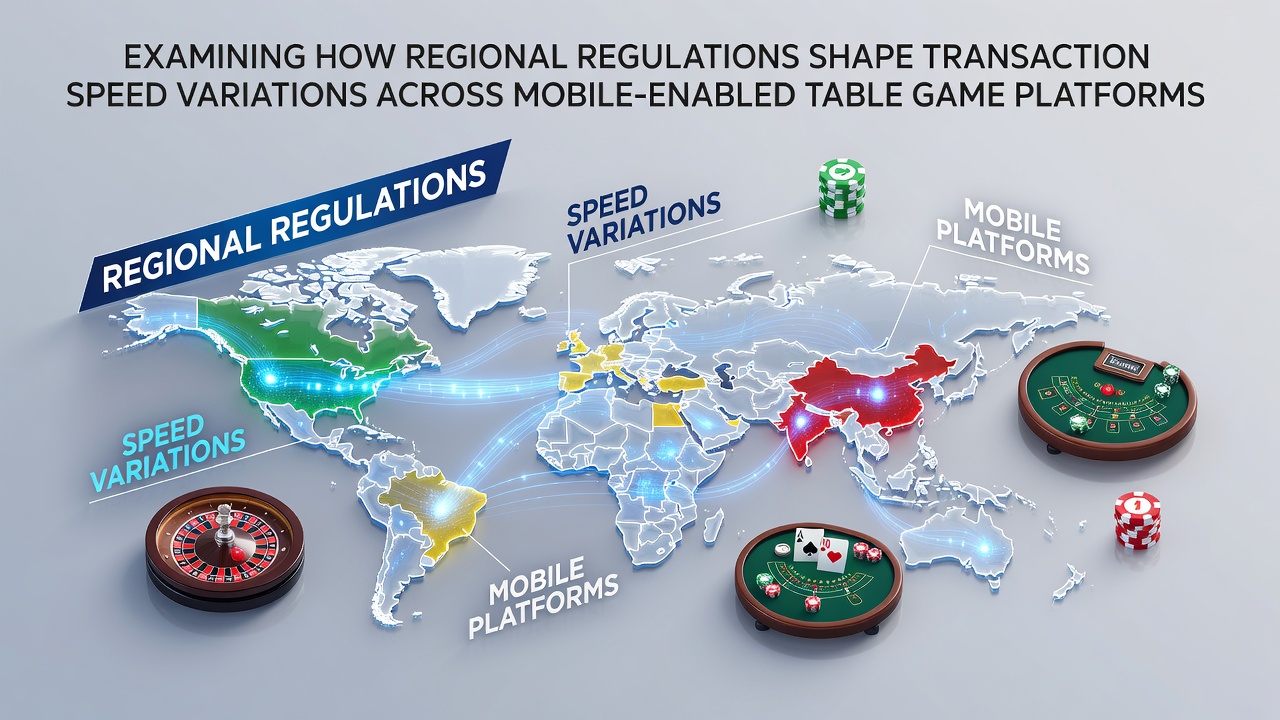
Regional regulations create distinct patterns in how quickly deposits and withdrawals move through mobile-enabled table game platforms, and those patterns emerge from specific rules on identity verification, payment routing, and anti-money laundering protocols. Data from multiple jurisdictions show measurable differences in average processing times that trace directly to the stringency and sequencing of those rules.
Regulatory Layers That Influence Speed
North American jurisdictions apply varying thresholds for real-time verification, and platforms must adjust their transaction pipelines accordingly. In Nevada, operators integrate with state-approved payment processors that complete initial checks within seconds, whereas Ontario requires additional cross-referencing with the Alcohol and Gaming Commission of Ontario database before funds become available for table game play. These differences produce average deposit times that range from under ten seconds in one location to more than two minutes in another.
European frameworks add further variation through directives that mandate separate layers of payment authentication. Mobile platforms serving users across multiple member states often route transactions through central clearing systems that enforce sequential approvals, and those systems create bottlenecks when traffic spikes during evening hours. Observers note that platforms frequently maintain separate transaction queues for each regulatory zone to avoid delays that would otherwise affect all users simultaneously.
Mobile-Specific Constraints and Adaptations
Table game applications on mobile devices rely on lightweight payment modules that must still satisfy full regulatory audits, and this requirement leads operators to embed region-specific code branches. One branch might skip redundant address confirmation when local rules permit it, while another branch triggers an external database call that extends the wait time. Research indicates these code-level decisions account for most of the observed speed gaps between platforms that otherwise share identical game engines.
August 2026 marks the scheduled rollout of updated payment tokenization standards in several Australian states, and operators have already begun testing parallel transaction paths that will activate once those standards take effect. Early test data suggest the new protocols could reduce certain withdrawal steps by 30 percent in compliant environments, although platforms serving multiple regions will need to maintain legacy flows for users outside the updated jurisdictions.

Payment Rail Choices and Their Regulatory Ties
Platforms select different payment rails depending on the destination market, and each rail carries its own regulatory overhead. Instant bank transfer systems popular in parts of Europe clear deposits faster than card-based rails yet require pre-authorization files that some regions treat as mandatory, whereas certain North American states allow provisional credit once initial identity data passes automated screening. These rail-level choices compound the time differences already introduced by identity checks.
Industry reports from the European Gaming and Betting Association document how platforms that segment their payment infrastructure by regulatory zone achieve more consistent speeds than those attempting unified global pipelines. The segmentation approach isolates regulatory delays to specific user cohorts and prevents a single jurisdiction's stricter rules from slowing transactions for users elsewhere.
Data Patterns Across Jurisdictions
Transaction logs aggregated across major operators reveal that average deposit completion times in regulated North American markets sit between 8 and 45 seconds, while comparable figures in parts of Asia that require manual review of high-value transfers extend into several minutes. Withdrawals follow similar spreads, with the longest recorded median times appearing in jurisdictions that mandate secondary approval for any amount above a defined threshold. These patterns hold across both blackjack and roulette sessions, indicating the variation stems from regulatory processing rather than game type.
Academic analyses of mobile transaction datasets further show that platforms able to pre-cache certain verification tokens experience shorter effective delays when users switch between regions. The caching technique works only where local rules explicitly permit it, which explains why some operators restrict the feature to users whose accounts originated in permissive jurisdictions.
Conclusion
Regional regulations continue to dictate the technical architecture and operational sequencing of mobile table game transactions, and the resulting speed variations reflect concrete differences in verification sequences, payment rail approvals, and data-sharing mandates. As new standards take effect in 2026 and beyond, platforms will likely refine their region-specific pipelines further to maintain competitive processing times while meeting each jurisdiction's distinct requirements.